Ready to help treat your pet to a healthy life?
VetDirect Pay™ vs. Reimbursement: What Pet Parents Should Know
By : Brooklyn Benjestorf | Published Nov 24, 2025

When your pet suddenly needs medical care, the last thing you want to think about is your bank balance. But too often, the cost of treatment becomes a barrier between “we can help” and “we can’t afford it.” Pet insurance exists to bridge that gap by helping pet parents say “yes” to care when it matters most.
Not all pet insurance handle payments the same way. Most companies will reimburse you after you’ve paid the vet bill, while Trupanion is the only provider that’s able to pay the veterinarian directly at checkout. Understanding the difference between VetDirect Pay™ and reimbursement can make a world of difference when your pet needs urgent care.
What is direct pay in pet insurance?
VetDirect Pay™ is exactly what it sounds like: your insurance provider pays the veterinary hospital directly, in real time, for covered costs.
Instead of paying the entire bill up front and waiting for reimbursement, the pet parent pays only their deductible and co-insurance (if applicable) on eligible expenses, and then Trupanion takes care of the rest.
It’s designed to remove a major barrier to care: the need to have thousands of dollars available at the time of treatment.
Trupanion is the only pet insurance provider that offers true payments to veterinarians directly, made possible through proprietary software that integrates seamlessly with a hospital’s existing workflow. Other companies may advertise “vet direct pay,” but most still require pre-authorization, rely on delayed processing times—such as funds only being available during business days/hours—or place the financial risk back on the pet parent if a claim is later denied and the clinic must recover the balance.
How VetDirect Pay™ works step-by-step:
- Visit a Trupanion software enabled hospital: The clinic must be connected to the Trupanion’s VetDirect Pay™ payment system.
- The vet submits the invoice: Using integrated software, the hospital sends the treatment information directly to Trupanion.
- Trupanion pays the vet directly: Once approved, payment is made, often before you even leave the exam room.
- The pet parent pays their share: You’re only responsible for covering whatever’s left on the bill, such as exam fees, deductible and co-insurance and any ineligible expenses.
Eligibility for VetDirect Pay™
Not all veterinary clinics are connected to Trupanion’s VetDirect Pay™ system that integrates directly into their workflow, allowing for real-time claims processing. But any hospital can get connected—the software is available to all veterinary teams who want to offer their clients a simpler way to pay. To find a Trupanion software-enabled hospital in your area, use our "Find a Vet Hospital" feature to locate a clinic that accepts direct payment near you.
The VetDirect Pay™ feature is available on all aspects of a member’s policy where accepted. It can be used for new accidents, illnesses, and injuries, and hospitals can submit your claim at any time, not just at the time of service.
How pet insurance reimbursement works
A traditional reimbursement model is likely the payout model that’s more familiar to most pet parents. It’s how most major pet insurance companies operate the majority of their business today.
Step-by-step of the reimbursement model:
- You pay the full vet bill: Whether it’s $300 or $3,000, you’re responsible for covering the entire invoice at the time of care.
- You file a claim with your insurance provider: This can usually be done online, through an app, or via email.
- You wait for reimbursement: The insurer reviews your claim and then, if the claim is approved, sends payment covering a percentage (typically around 70–90%) of eligible costs after your deductible.
How long does it take?
This will depend on the insurance provider. Industry-wide, typically reimbursement can take anywhere from a few days to several weeks, but 75% of Trupanion’s reimbursement claims are handled within 24 hours. Delays can happen when medical records or invoices are incomplete, or when the claim involves a complex condition that requires review.
Thanks to our award-winning AI-driven claims automation technology, Trupanion can process and approve invoices in as little as five seconds, automating more than 60% of claims and reimbursing members far faster than our competitors. This speed is powered by proprietary software built directly into veterinary workflows, allowing near-instant decisions when other providers may take days or weeks.
Factors that affect reimbursement
- Policy details: Your deductible, payout limits, and co-insurance percentage.
- Claim completeness: Missing or unclear documentation can slow the process down.
- Payment method: Some insurers reimburse via direct deposit while others may mail checks.
While the system does work to a degree, it requires pet parents to put up potentially very large sums of money, which can make immediate treatment difficult during emergencies. Trupanion offers a solution to this problem, enabling pet parents to only have to come out of pocket for their portion of the vet bill, while protecting the hospital experience for veterinary teams, letting them focus on providing the best medicine.
Why direct pay matters
In a recent episode of Radio Trupanion, host Brooklyn Benjestorf shared a personal story about her dog, Vinnie, who needed emergency spinal surgery after slipping a disc.
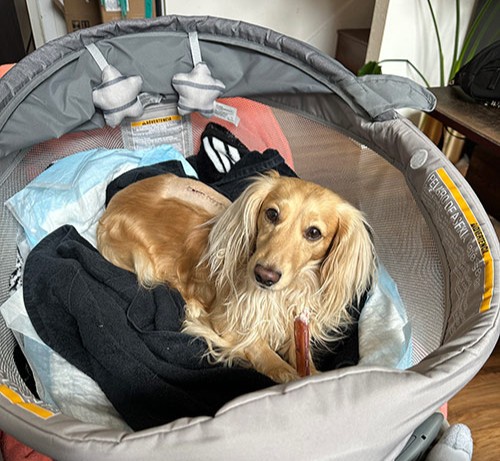
“Trupanion paid over $12,000 towards his spinal surgery, and vitally, the hospital that we took Vinnie to for his surgery had Trupanion's proprietary software,” she explained. “At checkout, I only had to pay a little over $1,200 out of pocket. If I’d had to come up with that $12,000 up front to float the hospital and wait for reimbursement, there is absolutely no way I could have come up with that kind of cash.”
Brooklyn and Vinnie's experience highlights the heart of direct pay: keeping love, not cost, at the center of every care decision.
And Trupanion has heard hundreds of stories like Vinnie’s. Some are highlighted on our Claims page, or you can browse over 7,000 member reviews on TrustPilot to get a sense of the difference direct pay makes in the lives of pet parents who have it.
The financial reality
Some pet parents consider self-funding instead of getting insurance by setting aside a little money each month into a savings account. While this method may help with minor expenses, it will rarely if ever keep up with the high cost of emergency care. A single surgery or extended hospitalization can cost thousands, quickly outpacing what most families can save in dog or cat years. The hard reality is that most pet parents won’t have enough money saved when they need it most.
VetDirect Pay™ bridges that gap by covering eligible costs quickly so pets can receive the care that they need right away, without delay.
Benefits of direct pay pet insurance
1. Immediate financial relief
With VetDirect Pay™, you don’t have to wait for reimbursement, and you’re far less likely to find yourself scrambling for cash or credit at checkout. Your eligible costs are paid directly to the hospital, which allows treatment to start immediately so you can get back to what matters most: taking care of your pet.
Registered veterinary technician and Trupanion Territory Partner Genesis Rendon explains it simply: “You could have pet insurance, but it doesn’t mean you have 100% to pay up front. You could have 10%, but not always the full amount — and that’s where we come in.”
2. Less stress during emergencies
Pet emergencies are emotional enough without financial panic. VetDirect Pay™ allows families to focus more on care, less on cost. To say an easy ‘yes’ to the care decisions that need to be made, without weighing the expense of each decision as it comes across.
3. Compassionate support for veterinary teams
When pet parents can’t afford care, the stress doesn’t just fall on them. It also weighs on veterinarians and staff. Compassion fatigue from frequent “cost conversations” is a well-documented issue in the industry.
Genesis shared how VetDirect Pay™ changes that dynamic: “When you can present an estimate that doesn’t say ‘$10,000’ but ‘$1,000,’ it’s saving a pet’s life. It also takes away the compassion fatigue from the team and the stress from the pet parent.”
Drawbacks and limitations of direct pay
VetDirect Pay™ isn’t yet a perfect solution. Understanding its limitations can help pet parents make more informed choices.
1. Growing availability
While not every veterinary clinic is connected to Trupanion’s VetDirect Pay™ system, adoption is growing quickly. As of October 2025, nearly 11,500 clinics across the U.S., Canada, and Australia are already set up, and that number continues to rise every month. The software is available to all 28,000 veterinary hospitals in the U.S., with roughly 1/3 already using it and more coming online as awareness and demand increases.
2. Coverage rules still apply
Even with VetDirect Pay™, coverage depends on your specific policy. Pre-existing conditions, exam fees, and routine wellness care will not be covered.
3. Technology dependence
VetDirect Pay™ relies on integrated software and a stable internet connection. This is a rare occurrence, but if these systems are temporarily offline, the claim may need to be processed manually for reimbursement instead.
Still, for many pet parents and veterinary clinics, these trade-offs are minor when compared to the convenience and peace of mind of the real-time coverage offered by vet direct pay.
Benefits of reimbursement pet insurance
While VetDirect Pay™ offers clear advantages, the reimbursement model still works well for many families—especially those whose clinics don’t yet support direct payment.
- Flexibility: You can visit any licensed veterinarian, anywhere, at any time.
- Familiar process: Most pet parents already understand the “pay-and-claim” model from other types of insurance.
- Broad provider access: Even without integrated software, reimbursement ensures coverage remains portable across all hospitals and states.
For families with savings cushions or access to credit, reimbursement remains a solid option. The key is to understand how long payouts can take and to plan accordingly.
Why veterinarians value real-time payment
Veterinary professionals often share that one of the toughest parts of their job isn’t the medicine—it’s the money conversations. Cost concerns can add stress for clients and for the teams who want nothing more than to help their patients.
Dr. Lisa Yee of Guilford Animal Hospital explains how having insured clients changes that dynamic: “As a veterinarian, it’s our role to heal animals and keep them healthy. It’s most rewarding to be able to provide a pet with the best care possible, and this can be facilitated by pet insurance. This is especially the case when pet parents have the security of a plan that offers a pay to hospital feature. They then don't need to make the difficult decision to compromise on care due to finances, and we can all be at ease knowing gold standard medicine can be provided for the animal. In the end, that is why I’m in veterinary medicine.”
VetDirect Pay™ doesn’t just support pet parents. It helps veterinarians provide the best care possible with fewer uncomfortable conversations about money.
Comparing VetDirect Pay™ vs. reimbursement
Feature | VetDirect Pay™ | Reimbursement |
|---|---|---|
Who pays upfront? | Insurance pays vet directly | Pet parent pays full bill |
When payment occurs | Immediately at checkout | After claim is processed |
Stress level | Low: no waiting or large up-front cost | Moderate: depends on reimbursement time |
Vet participation required? | Yes, must be connected | No, works at any licensed vet |
Paperwork | Minimal: handled by vet | Pet parent must submit claim |
Ideal for | Emergencies, major treatments | Standard or non-urgent care, flexible travel |
The broader impact: reducing financial euthanasia
One of the most heartbreaking realities in veterinary care is a widespread problem called “economic euthanasia.” This is the unfortunate reality when families are forced to euthanize a pet because they can’t afford treatment.
As Genesis explains, the difference between a $10,000 estimate and a $1,000 out-of-pocket cost can literally save a life. “It can save a pet’s life,” she said. “It’s less animals in shelters, less euthanasias, and more pets getting the care they deserve.”
By removing obstacle of large up-front payments, vet direct pay helps close the gap between what’s medically possible and what’s financially feasible for our pets.
Helping pet parents say “yes” to care
At its core, VetDirect Pay™ is about access. It protects loving pet parents against having to choose between their wallet and their pet’s well-being.
Veterinary technology and medicine have advanced dramatically, but for too many families, financial access hasn’t kept pace. VetDirect Pay™ helps to close that gap by simplifying how pet insurance works at the exact moment it matters most.
As Genesis Rendon puts it best: “It’s peace of mind. The pets get the care they deserve, and everyone—the pet, the parent, and the veterinary team—goes home happier.”
Common questions about direct pay and reimbursement
Can I use Trupanion if my vet isn’t connected to VetDirect Pay™?
Yes. Claims can still be submitted manually for fast reimbursement. VetDirect Pay™ is simply an added benefit at connected hospitals.
How fast are Trupanion reimbursements?
Most are processed within 12–24 hours once documentation is complete.
Does vet direct pay work for all treatments?
It applies to all eligible conditions covered under your policy, so all new illnesses, injuries, diagnostics, surgeries, and medications. Preventive and wellness care are not covered.
Do I need pre-authorization to use VetDirect Pay™?
No pre-authorization is required, but your vet can submit a pre-approval request to Trupanion if specific circumstances call for it. Otherwise, your vet simply submits the invoice at checkout, and the system handles the rest.
Where can I find a hospital that offers Trupanion’s VetDirect Pay™?
You can use the Trupanion Hospital Locator to find participating clinics.
Pet Parenting is the official dog and cat blog of Trupanion, a leader in the world of pet insurance. Here you’ll find useful dog and cat care tips, important veterinary insights, and an abundance of pet lifestyle topics. All of our articles are written by real humans with a love for pets, not AI. However, please note that the views expressed here are those of the individual authors and do not necessarily reflect those of Trupanion. Articles are reviewed by veterinarians for accuracy, but they are not a substitute for professional diagnosis and treatment. Always consult with your own pet’s veterinarian for advice.